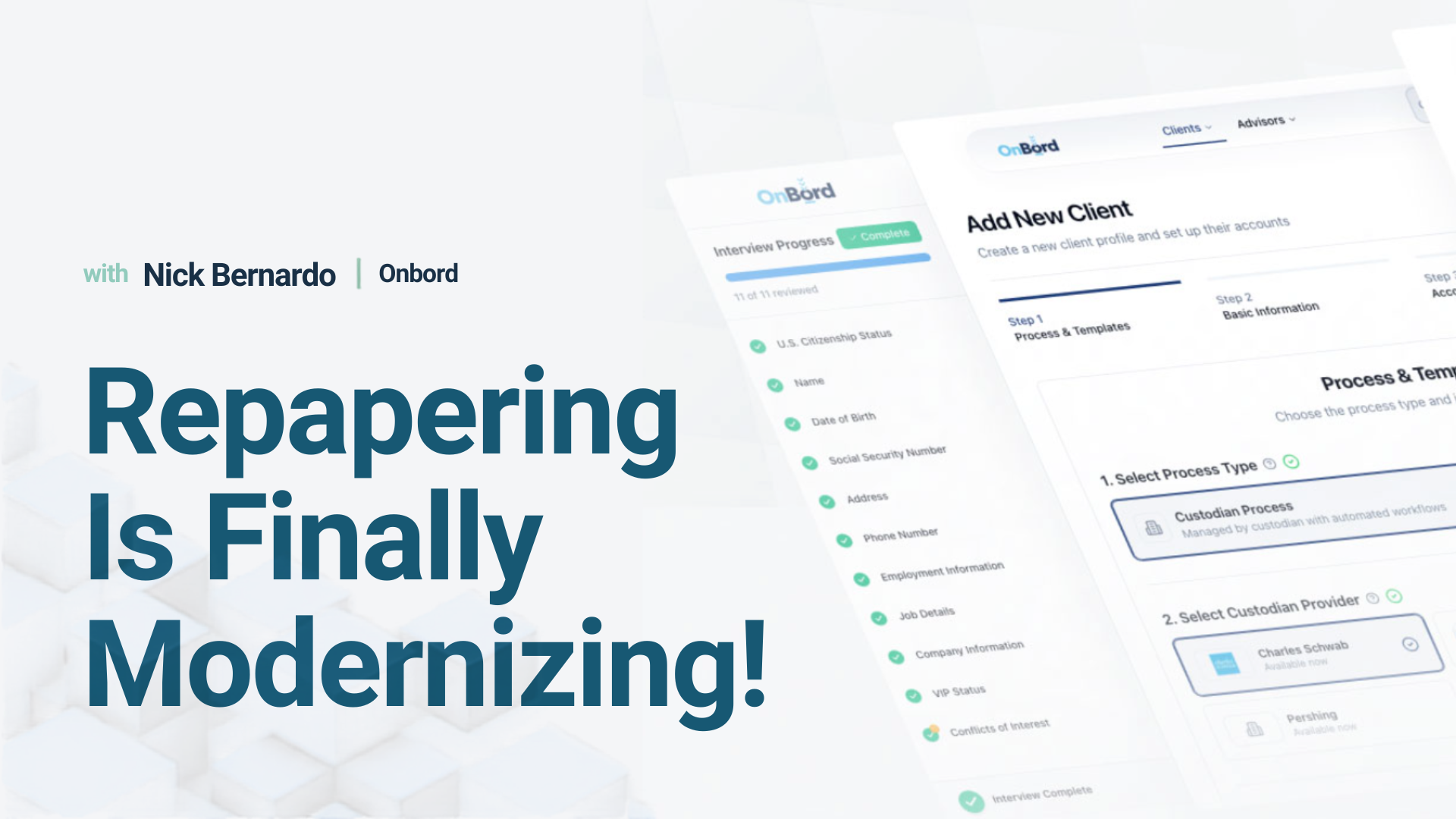
Repapering Is Finally Modernizing!
Ask an advisor who is philosophically ready to leave what is actually holding them back, and the answer is rarely the economics or the culture. It is the paperwork. The custodial spreadsheet, the redundant data entry, the fear of spending three months rebuilding a book from scratch. I hear this from advisors who have already decided a move makes sense and are still stuck on the mechanics of making it happen

Are Minority Sales Just Retention Plays?
If your firm sold twenty percent of itself a few years ago and nothing has changed since, it is easy to file that under settled business. I want to walk through why that read is usually wrong, and why the timeline matters more than the transaction did.

Building Your Own RIA Will Not Give You Your Time Back
There is a difference between owning your business and running your own RIA, and most advisors don't separate the two until they are already committed to one.
I understand how advisors get there. You picked an independent platform because it was entrepreneurial, flexible, and built around people like you. Then the organization grew. More layers, more centralized decision-making, more standardization. The things that drew you in started to thin out. At some point, the conclusion feels obvious. If the platform keeps drifting, take everything in-house and control it yourself.
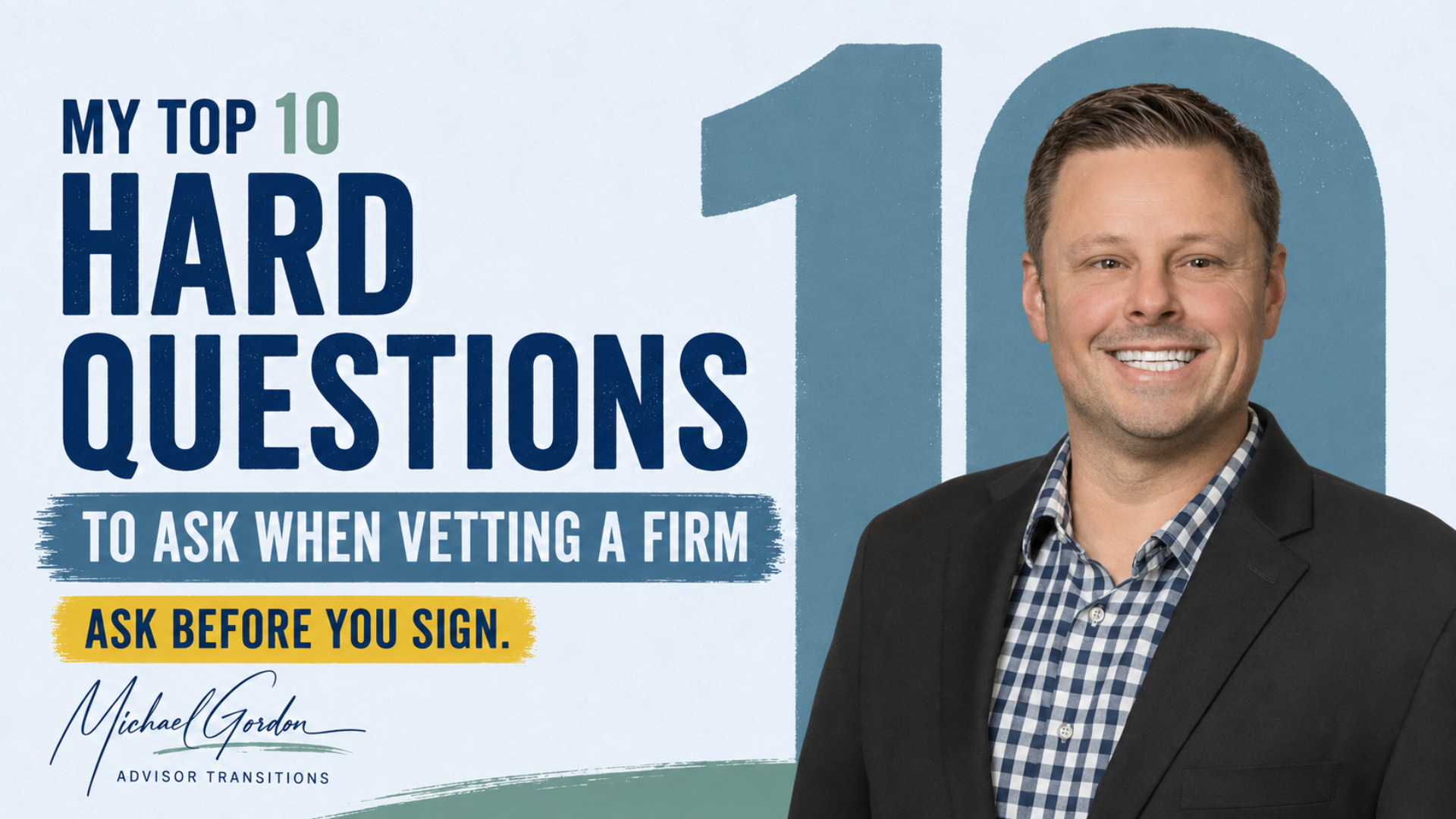
10 Questions to Measure Fit for an RIA or BD
Every recruiter talks about fit. It's arguably the most important thing we are trying to accomplish when introducing you to potential firms, but what actually is fit? Fit is not a feeling. It is a set of specific, answerable questions that most advisors have never been walked through before signing with a platform. Some of them find out years later why they should have been.

The Scale vs Service Problem
A family-run RIA principal said something to me recently that I can’t unhear. “Private equity is doing to the RIA space what the wirehouses did in the nineties: standardizing everything, tightening everything, and calling it progress.”

The Agreement Says You Own Your Clients? Read It Again.
I read a lot of advisor agreements. More than I would like to. These days, I’m absolutely seeing a trend in large broker-dealers and RIAs offering more perks in the recruiting pitch in exchange for less overall autonomy for the advisor.

Is Your Recruiter Smarter Than ChatGPT?
Here is an experiment. Open ChatGPT, tell it you are a $2.5M producer at a large broker-dealer, that you value autonomy, want better service infrastructure, and are thinking about making a move. Ask it for the best platforms to consider.
It will give you a list. The list will be coherent. It will include firms you have heard of, with reasonable descriptions of what each one offers. It will look like research.

The Right Way to Think About Up Front Money
There are two advisors this industry loves to talk about.
The first one moves primarily for the upfront money, collects a check, and calls it a business decision. The second one treats any conversation about transition economies like a personal insult. They’re too principled for the payout discussion.

Some OSJs Are Just Wirehouses With Better Marketing
Most of the advisors I talk to who are unhappy at an OSJ or hybrid RIA will tell you the same thing: the pitch was great. The reality took about eighteen months to reveal itself.
They are paying an override for support they are doing themselves. They cannot leave their custodian without leaving the OSJ. When something breaks, the OSJ points at the custodian, and the custodian points back. The advisor is stuck in the middle of a blame loop that they are paying for.

The Indie-to-Indie Second Move
There is a growing wave of advisors making a second move, and it differs from the first in almost every way. The first move was about getting free. This one is about getting it right.
If you have been telling yourself the upgrade is too much hassle, I want to push back on that. Transitions have never been more accessible.

The Succession Window Is Open. It Will Not Stay That Way.
If you’re an advisor under 45, you likely don’t remember being in this business in 2008. I would suggest, though, that even the ranks of advisors who endured that terrible market cycle have grown a bit comfortable riding the wave of the last ~18 years of up-and-to-the-right.

Doing Nothing Is Still a Decision
I use this analogy with advisors more than any other. Think about the risk-averse client who loads up on fixed income to feel safe… and walks straight into inflation. By protecting against one thing, they fully exposed themselves to another. By doing nothing, they were still taking a risk. They just were not naming it.
Financial advisors are in the same position.

5 Hot Takes From An M&A Executive
We’re back this week with more from my guy Kyle Campbell. He has been doing M&A in the wealth management industry for nearly a decade. He is a Certified Valuation Analyst, is currently Senior Vice President of Corporate Development at OneDigital, and has closed approximately 500 transactions. I have known him for about ten years.

Is The Rollup Model Dead?
I had a conversation recently with Kyle Campbell, SVP of Corporate Development at OneDigital. He’s also a Certified Valuation Analyst who has closed nearly 500 M&A transactions in the wealth management industry. He made a pretty direct argument during our interview: the historical rollup model is dead.

How To Create Your Shortlist For A Transition
Most advisors build their firm's shortlist the same way they pick a restaurant. They go with what is familiar, what a friend recommended, and whatever showed up first when they started looking. That process works fine for dinner. It is a real problem for a seven-year note.
Here is how I actually do it.

Bad Transition Advice Costs Advisors
I have been in this business long enough to watch the same mistakes happen repeatedly, and the one that bothers me most is not the advisor who made a bad decision. It is the advisor who made a bad decision because someone who was supposed to be helping them was actually helping themselves.
Let me walk through three situations from recent conversations. Names and details changed, but the situations are real.

LPL Is Still a Good Home. Just Not for Every Advisor.
Given everything I talk about on this page, I imagine that headline surprises some people, but intellectual honesty is the whole point of this, so here it is: LPL is still a genuinely good platform for a meaningful segment of advisors, and pretending otherwise would make one largely disingenuous.
The question was never whether LPL is good or bad. It's whether it fits and for whom.
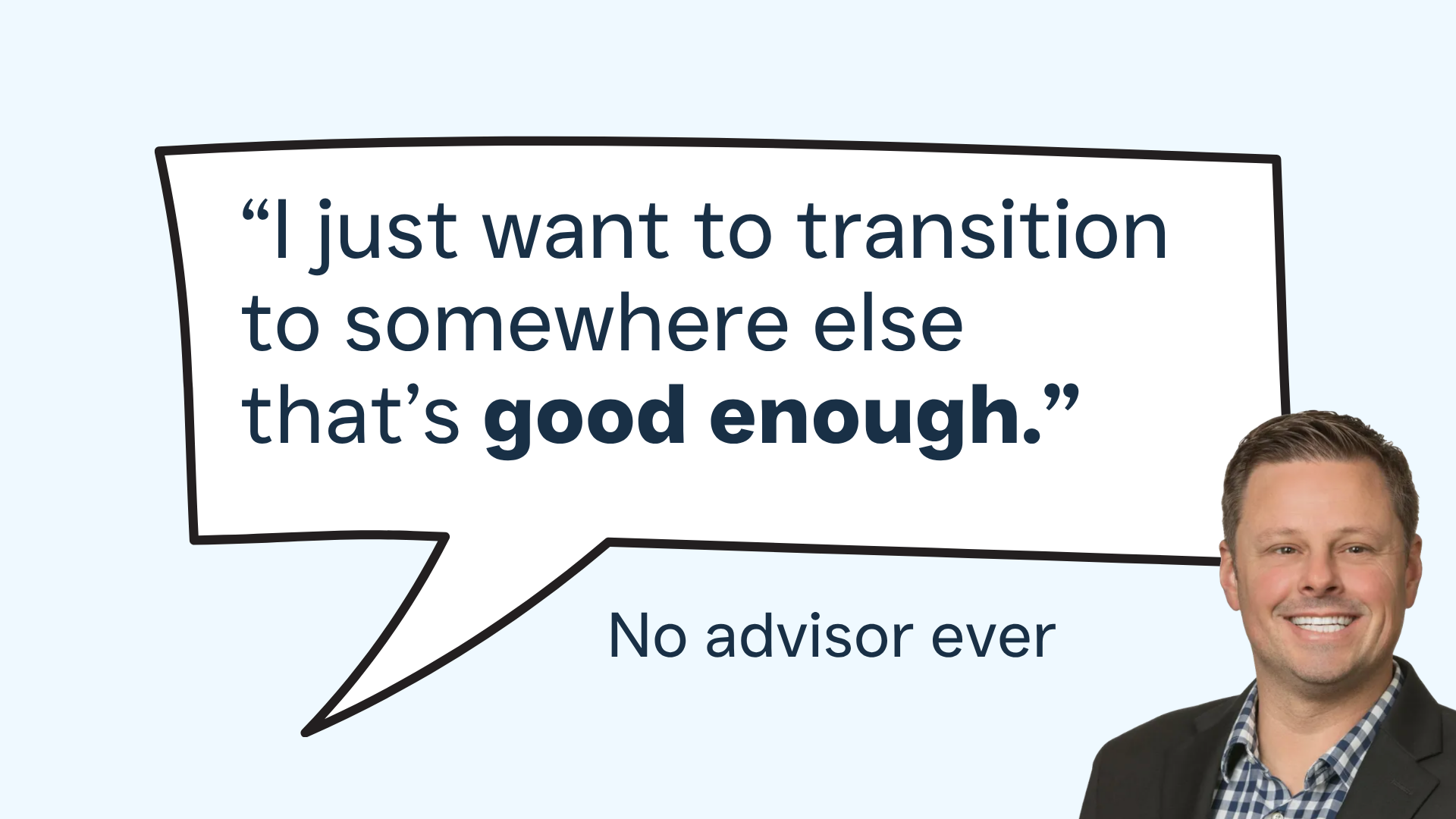
Is Good Enough Really the Goal Here?
Thirty years of building a book and the finish line at a drifting firm is "fine." That doesn't sound right to me.
The advisors I've worked with who landed at truly excellent RIAs or BDs didn't necessarily make better decisions about where to go. They made a better decision about when to start looking. That's it. That's the whole thing.

How You Affiliate With LPL Will Define Your Experience. Most Advisors Only Know Half the Options.
Most advisors who reach out to me about LPL are focused on one question: Should I make the move? It's a reasonable place to start, but in my experience, it's almost never the most important question.

The Mariner–PAG–LPL Triangle: What's Actually Happening and What It Means for You
An advisor chooses a platform because it feels right, often because it’s small enough to get real attention. The pitch is a culture that’s relationship-driven with people who answer the phone actually knowing who you are. The culture matches the business they're trying to build.
Then something changes, usually an ownership event, a “strategic pivot”, or a new capital partner with different priorities. The platform starts to feel different, subtly at first, then less subtly. The advisor tells themselves it'll stabilize. Sometimes it does. Sometimes you just end up in the next chapter of the same story.